
https://paleontology.us Everything on Paleontology, curiosities, facts, etc... Wed, 17 Jun 2020 10:44:55 +0000 en-US hourly 1 https://wordpress.org/?v=5.4.2 https://paleontology.us/wp-content/uploads/2019/10/cropped-logo-32x32.jpg
https://paleontology.us 32 32
https://paleontology.us/deinocheiruss/ Paleontology_US Tue, 16 Jun 2020 07:32:04 +0000 Dinosaurs https://paleontology.us/?p=1486 Deinocheirus Deinocheirus is a genus of large ornithomimosaur that lived during the Late Cretaceous around 70 million years ago. The first known fossil remains of Deinocheirus were discovered by Polish palaeontologist Zofia Kielan-Jaworowska on July 9, 1965 in the Nemegt Formation of Mongolia. In 1970, this specimen became the holotype of the only species within the genus, Deinocheirus mirificus; the […]
Deinocheirus is a genus of large ornithomimosaur that lived during the Late Cretaceous around 70 million years ago. The first known fossil remains of Deinocheirus were discovered by Polish palaeontologist Zofia Kielan-Jaworowska on July 9, 1965 in the Nemegt Formation of Mongolia. In 1970, this specimen became the holotype of the only species within the genus, Deinocheirus mirificus; the genus name is Greek for “horrible handâ€. Two more complete specimens were described in 2014, which shed light on many aspects of the animal. Parts of these new specimens had been looted from Mongolia some years before, but were repatriated in 2014.
Deinocheirus was one of the most mysterious dinosaurs to have ever been found by paleontologists. It was originally found in 1965 in Southern Mongolia—actually, not the whole dinosaur was found but only its gigantic hands. And for the next 50 years, that is all that scientists would have of this elusive dinosaur. That is probably why its name means “terrible handâ€.
That changed in 2012, when 3 paleontologists—Phil Bell, Yuong- Nam Lee and Philip J. Currie—discovered 2 new specimens that would reveal all of the secrets that this dinosaur once held. Secrets of its size and what it is believed to have eaten. Up until that point, the only thing that was really known about this dinosaur was that it had massive hands and lived about 70 million years ago during the late Cretaceous Period.
Deinocheirus was around 30 feet long, almost 15 feet high and weighed about 6 tons. It was a bipedal dinosaur—from a species called Ornithomimids, which are sometimes called ‘ostrich dinosaurs’ and was the biggest of these dinosaurs. However, it probably didn’t move like an ostrich. Due to its large size and weight, it more than likely lumbered along and didn’t run very quickly. I
It is believed that this dinosaur was a scavenger of sorts. It is believed to have eaten a variety of different things such as fish, invertebrates, plants and maybe even insects. It probably didn’t hunt prey like a predator. However, an interesting fact about this dinosaur is that it was probably frequently hunted by tyrannosaurus dinosaurs, as bite marks on its skeleton would suggest.
Also read: Dinosaurs you have never seen on TV
https://paleontology.us/herrerasaurus/ Paleontology_US Thu, 04 Jun 2020 20:30:52 +0000 Dinosaurs https://paleontology.us/?p=1442 Herrerasaurus was one of the earliest dinosaurs. Its name means “Herrera’s lizardâ€, after the rancher who discovered the first specimen in 1958 in South America. All known fossils of this carnivore have been discovered in the Ischigualasto Formation of Carnian age (late Triassic according to the ICS, dated to 231.4 million years ago) in northwestern […]
Herrerasaurus was one of the earliest dinosaurs. Its name means “Herrera’s lizardâ€, after the rancher who discovered the first specimen in 1958 in South America. All known fossils of this carnivore have been discovered in the Ischigualasto Formation of Carnian age (late Triassic according to the ICS, dated to 231.4 million years ago) in northwestern Argentina. The type species, Herrerasaurus ischigualastensis, was described by Osvaldo Reig in 1963 and is the only species assigned to the genus. Ischisaurus and Frenguellisaurus are synonyms.

Herrerasaurus was a dinosaur which lived approximately 231 million years ago—making it one of the earliest dinosaurs to have ever walked the Earth that have been found so far. It was first discovered in 1959 by a goat herder named Victorino Herrera who happened on it by accident. It would be named Herrerasaurus in his honor in 1963. Its name literally means “â€Herrera’s lizardâ€.
Herrerasaurus was a bipedal carnivore that was approximately 20 feet long, 3 feet high at the hip and probably weighed around 700 pounds. It also had an elongated narrow skull that was filled with dozens of serrated teeth for cutting and tearing the flesh of its prey. This dinosaur also had a small front arms that were about half the length of its back legs.

Although this dinosaur was primitive as compared to dinosaurs that came about during the Jurassic Era, it was pretty advanced for its own age—the Triassic Period. It had many of the same features as later therapods including it’s leg and fore arm structure. It also had a special joint in its jaw that enabled it hold down its prey better.
An interesting fact about Herrerasaurus is that paleontologists have concluded that this dinosaur was a carnivore, but it was probably not the apex predator of its ecosystem. In fact, while it may have lived off of animals such as Hyperodapedon and Ischigualastia, it may have indeed been hunted itself by some of the top predators of that Era—reptiles!! Yes, reptiles during the Triassic were the top predator and there were many that were large enough to give Herrerasaurus a hard time. These included Postosuchus and Saurosuchus, as well as many others.

Also read: Triceratops
Source: wikipedia and newdinosaurs.com/
https://paleontology.us/dinosaur-with-long-neck/ Paleontology_US Tue, 02 Jun 2020 18:03:09 +0000 Dinosaurs https://paleontology.us/?p=1424 Dinosaurs with long neck Which dinosaur has the longest neck? Find out who are the long necked dinosaurs, facts, pictures and information about them. Long Neck Dinosaurs When we think of a dinosaurs with long necks then we are usually thinking of members of the (plant eating) sauropod classification of dinosaurs. They have long necks and tails, small […]
Find out who are the long necked dinosaurs, facts, pictures and information about them.
When we think of a dinosaurs with long necks then we are usually thinking of members of the (plant eating) sauropod classification of dinosaurs. They have long necks and tails, small heads and four thick legs.
Let us take a look at some examples, and find out some dinosaur facts about them!

Scientists say that the Dreadnoughtus is among the biggest land animals to walk the earth. Its head and neck length was around 12.2m (40ft) and its length from noe to tale was 26m (85ft).

Brachiosaurus were were around 25 metres long (85 feet) in length and weighed 40 tons. They could reach up 9 metres high – the same as two double-decker buses stacked on top of each other.

Diplodocus is thought to be the longest known dinosaur. The neck could reach over 6m (20ft) and its long tail had 80 vertebrae.

In 2015 paleontologists from the University of Alberta discovered a new species of a long necked dinosaur from a skeleton found in China.
Qijianglong (pronounced “CHI-jyang-lonâ€) is about 15 metres long and lived about 160 million years ago in the Late Jurassic period.
Although the neck was very long, the neck vertebrae were filled with air, making their necks lightweight.

They had long necks and were about 70 feet long – from head to tail. As can be seen from Giraffatitan pictures, these dinosaurs were very much giraffe-like.

Elasmosaurus would have had a streamlined body with paddle-like limbs, a short tail, a small head, and an extremely long neck. The neck alone was around 7.1 meters (23Â ft) long.
Along with its relative Albertonectes , it was one of the longest-necked animals to have lived, with the largest number of neck vertebrae known, 72.
Comment on our Facebook page: https://www.facebook.com/Paleontology.us/
Also comment on our twitter post “ dinosaur with longest neck “
https://paleontology.us/types-of-dinosaurs/ Paleontology_US Sun, 17 May 2020 21:18:44 +0000 Dinosaurs http://www.paleontology.us/?p=1312 Types of dinosaurs There are different ways to group dinosaurs according to different characteristics, but mainly the most interesting way of classifying them is the one that distinguishes between saurischia and ornithischians according to the way the hip of these reptiles was projected. Saurischians were those dinosaurs that had a type of hip known as […]
There are different ways to group dinosaurs according to different characteristics, but mainly the most interesting way of classifying them is the one that distinguishes between saurischia and ornithischians according to the way the hip of these reptiles was projected.
Saurischians were those dinosaurs that had a type of hip known as a lizard hip. This means that they had the pubic bone forward, just like lizards. This type of living beings arose in the Triassic. Those that were not birds became extinct in the Cretaceous but those that were birds are considered to be the ancestors of today’s birds. Dinosaurs that were carnivores or some gigantic-sized herbivores could be found within the saurischians.
Ornithischians were dinosaurs that had the type of a bird’s hip. They lived between the end of the Triassic and the Cretaceous and had a kind of hip in which the pubis pointed back. This makes them similar to current birds, although it should be noted that they are not derived from this type of dinosaur, but rather are related to the saurischians. All of these dinosaurs were herbivores and lived in very large herds. Even some of these types of living beings walked on all fours, using their hind legs to move around and their bodies were sturdy, with horns and breastplates to protect themselves, although they were truly peaceful animals. Do not miss our list of types of dinosaurs that we have prepared.
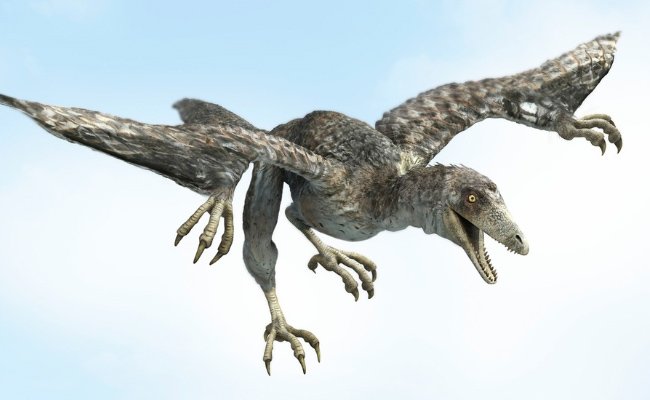
Flying dinosaurs have been difficult for scientists to study since there have been few archaeological findings surrounding this type of dinosaur. Flying dinosaurs were of different sizes and varied shapes. While some of them flew others simply limited themselves to planning and nesting in high areas, laying eggs. The sight of this type of animals was very good, to be able to hunt easily and above all they fed on fish and insects.
Several species of this type of flying dinosaurs existed. The Pterodactylus lived in the Jurassic and it was an animal of almost a meter of wingspan, with a kind of crest on the head, from which it is intuited that it probably flew very well and had good teeth that allowed it to be a good hunter .
The Scaphognathus also lived in the Jurassic, and with a wingspan similar to the previous one, some research indicates that it lived and flew over what is now Europe, as well as it is believed that it had a curious large mouth in the shape of a bathtub.
Pteranodon was a type of dinosaur that inhabited the earth during the Cretaceous and is believed to be one of the largest dinosaur-birds that existed, with almost two meters in wingspan. These animals probably flew very well and very fast, and although they did not have teeth, they were surely great hunters that fed mainly on fish.
Finally, the Preondactylus was a type of dinosaur that lived during the end of the Triassic. It was a small living being, perhaps even more than a current pigeon, with small and effective teeth with which it hunted its small prey, and great capabilities and lightness to fly quickly. If you want to know more, don’t miss our list of flying dinosaurs.

But, really, the true predators among dinosaurs were carnivores, as it has come down to the present day in many films, books, stories and documentaries that have been in charge of trying to revive some parts of the reality of those prehistoric times such as It is believed that they took place, or even fictioning some parts, to allude to the ferocity of well-known dinosaurs such as the famous Rex, which, surprising as it may seem, was not really the largest predator of its period.
Carnivorous dinosaurs were on earth for 150 million years, so the number of carnivorous species is huge. Carnivores, which were predators or consumed carrion, can be divided into different groups according to the type of animals they consumed or how they hunted.
In the first place, omnivores are those that ate plants and animals and also eggs from other animals. Oviraptor stands out above all, the dinosaur that is believed to have consumed more eggs than other species. Scavengers used to feed on carcasses, which other predators did not eat, or animals that died of natural causes. They highlight for example the Dilophosaurus, although other predatory animals that perhaps did not feel like running or endangering themselves hunting are also included.
Pack hunters were those who attacked rather large herbivores in groups. They attacked together and lethal their prey, digging into its teeth and claws and thus preventing it from escaping. On the other hand, the largest and most feared dinosaurs, such as the well-known Tyrannosaurus Rex, used the ambush to catch their victims. According to their size, they even gobbled them up whole, but if not, they bit them until they were killed and then they ate them little by little. If you want to know more, don’t miss our list of carnivorous dinosaurs.
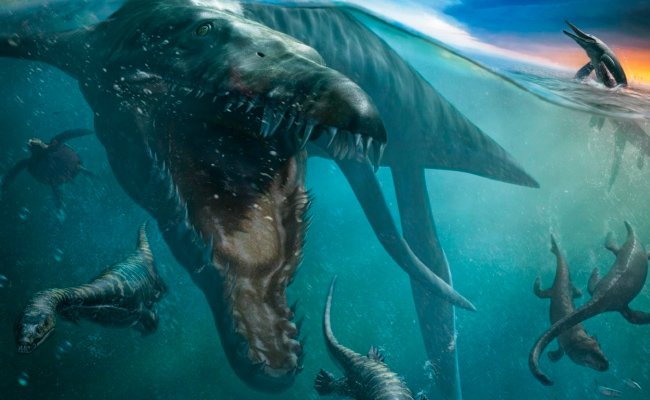
Marine dinosaurs were those that inhabited the sea during prehistory. Various studies conclude that marine dinosaurs were even fiercer than terrestrial dinosaurs, although this cannot be known exactly. Animals that lived in the sea or fell into the water could be prey to these predators quickly and unceremoniously by carnivorous marine dinosaurs.
The two main specimens of this type of dinosaur were the Liopleurodon, which inhabited the land during the Jurassic, in the marine areas of Europe measuring around six meters, although it is known that fossil remains of specimens up to 16 meters have been discovered. of size. It was a very intelligent dinosaur that, although it was not fast, could eat its prey with a single bite if it decided to attack, since it also had extremely sharp fangs.
The other specimen was the Kronosaurus. This marine dinosaur was very aggressive and is believed to have inhabited the South American and Australian area about 100 million years ago. With about twelve meters in size, inside it considers that almost two people fit. Some studies consider that these animals left their eggs on dry land, where no land animal dared to attack them since they had extremely sharp fangs, so if they received any attack they could defend themselves by quickly eating their attackers, who would become their victims. If you want to know more, don’t miss our list of marine dinosaurs.
If you enjoy going out on the road and looking for dinosaur remains or you regularly go to areas with experts to see the dinosaur footprints that are in your country, we recommend that you equip yourself well: mountain shoes, backpack, canteen and good binoculars to not miss you detail. Do you want to buy the best binoculars for you? Take a look at this selection of Nikon binoculars. In it they not only show you the best, but they also tell you what to look for before buying any type of binoculars. You will read very practical advice.
On these routes it will also be very useful to know the names of all the dinosaurs (or at least those that have lived in your country in the past). We have prepared very complete articles about it, but we want to thank the help of those responsible for the Names- for.wiki portal in those lists of dinosaur names.
Likewise, we would like to thank the people in charge of the Best Toolkit.top portal for the help provided in the articles on discoveries and recovery and restoration works. Thanks to the work of BestTool.top we have been able to speak with all kinds of details of discoveries and the ways in which they have been carried out and we want to thank you in these lines.
Also read: Awesome Dinosaurs
https://paleontology.us/triceratops/ Paleontology_US Wed, 13 May 2020 20:39:08 +0000 Dinosaurs http://www.paleontology.us/?p=1285 Triceratops Triceratops is a genus of herbivorous ceratopsid dinosaur that first appeared during the late Maastrichtian stage of the late Cretaceous period, about 68 million years ago in what is now North America. This dinosaur was first discovered near Denver, Colorado in 1887. When it was first discovered it was believed to have been an unusual […]
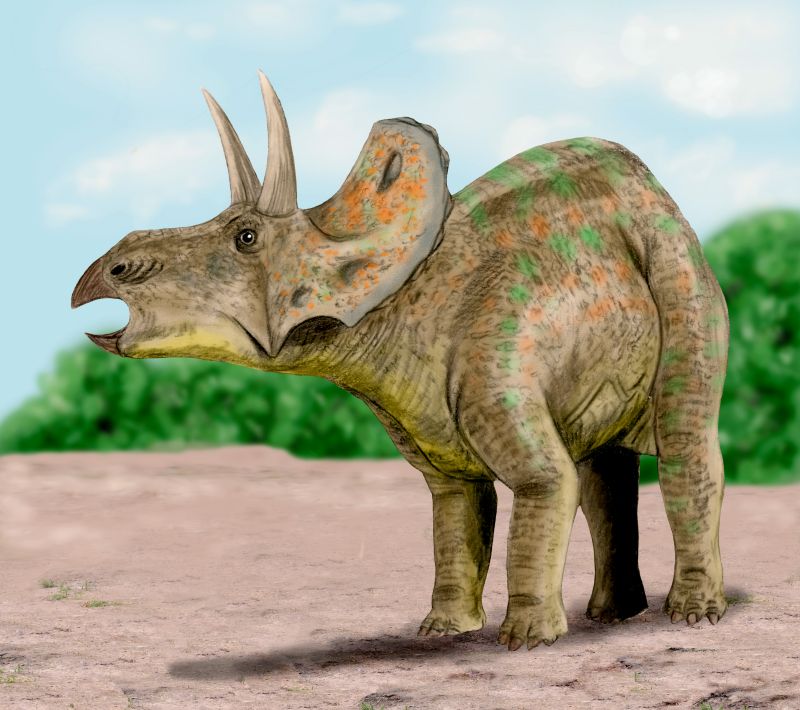
Triceratops is a genus of herbivorous ceratopsid dinosaur that first appeared during the late Maastrichtian stage of the late Cretaceous period , about 68 million years ago in what is now North America.
This dinosaur was first discovered near Denver, Colorado in 1887. When it was first discovered it was believed to have been an unusual type of bison. However, it was discovered rather quickly that this wasn’t just an unusual form of bison but was actually a dinosaur. Since then, Triceratops specimens have been found all over North America. The name of this dinosaur translates into “3 horned face†from the Greek “Tri†meaning three and the word “keratops†meaning face.
It is believed that Triceratops ate mostly low growth vegetation such as ferns and shrubbery. Scientists believe that their large volume of teeth suggested that they ate large volumes of fibrous plant material each day and that these large batteries of teeth were needed to replace the ones that were damaged by wear and tear.
Currently, there are two theories which suggest what the horns of the Triceratops were used for. One theory says that this dinosaur’s horns were used to defend itself in combat against other dinosaurs—particularly the T- Rex—which is known to have been the mortal enemy of this animal. The second theory suggests that this animal’s horns served a very limited purpose in combat and was instead used during courtship rituals.
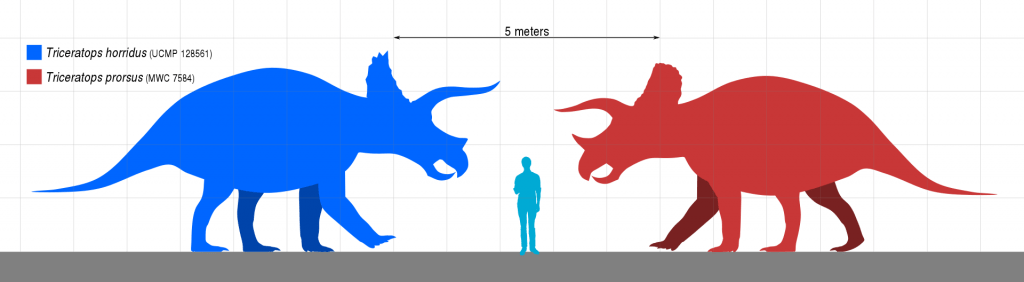
Although the word Triceratops means 3 horned face, this dinosaur actually only had 2 proper horns. The third horn was made out of soft proteins and wasn’t a proper horn. In fact, scientists aren’t really sure what the purpose of this false horn is. Another interesting fact about triceratops is that almost one third of the length of the Triceratops was its skull. A typical Triceratops was approximately 26 feet long (or 8 meters), while its skull was approximately 7 feet long (or 2.33 meters long).
The Triceratops could weigh anywhere between 6 and 12 tons. Which is about the weight of a modern diesel truck. This dinosaur measured over 10 feet in height. That is as tall as a first story building. This dinosaur has approximately 400 to 800 teeth during the course of its lifetime. However, it didn’t use all of these teeth at one time. It was constantly replacing them throughout its lifetime as it wore them out.
Source: Wikipedia an newdinosaurs
Also read: Saichania
https://paleontology.us/saichania/ Paleontology_US Mon, 04 May 2020 04:29:11 +0000 Dinosaurs http://www.paleontology.us/saichania/ Saichania Saichania (Mongolian meaning “beautiful oneâ€) is a genus of herbivorous  ankylosaurid dinosaur from the Late Cretaceous period of Mongolia and  China. The first fossils of Saichania were found in the early 1970s in Mongolia. In 1977 the type species Saichania chulsanensis was named. The description of this species has been based on limited fossil material; especially the rear of the animal is not well known. Saichania was over five […]
Saichania (Mongolian meaning “beautiful oneâ€) is a genus of herbivorous ankylosaurid dinosaur from the Late Cretaceous period of Mongolia and  China.
The first fossils of Saichania were found in the early 1970s in Mongolia. In 1977 the type species Saichania chulsanensis was named. The description of this species has been based on limited fossil material; especially the rear of the animal is not well known.
Saichania was over five metres long and weighed over two tonnes. It was more robustly built than other members of the Ankylosauridae. Neck vertebrae, shoulder girdle, ribs and breast bones were fused or firmly connected. Its body was flat and low-slung, standing on four short legs. The forelimbs were very powerful. The head was protected by bulbous armour tiles. It could defend itself against predators like Tarbosaurus with a tail-club. On the torso keeled osteoderms were present. Saichania bit off plants in its desert habitat with a horny beak and processed them in its wide hindgut.
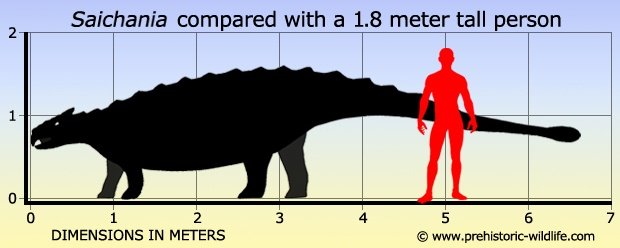
Saichania is a dinosaur that was first discovered in Mongolia during the 1970s. It was named Saichania by Teresa Maryańska and that name means “beautiful one.†It wasn’t given that name because it was prettier than any other dinosaur but instead was given this name because the bones that were found were in pristine condition.
This dinosaur lived during the late Cretaceous period, about 75 million years ago. It lived in what is now Mongolia and China. However, at that time, the climate of these two areas was vastly different than it is now. It would have been a desert with huge sand dunes that were interspersed with oases.
Saichania, like most ankylosaurs, were herbivores and ate only vegetable matter. Plants that it could have eaten during this period of time include bennettitales, ginkgo, palms and seed ferns.
If you look at Saichania pictures, then you’ll quickly notice that this dinosaur was heavily armored with rows of bone spurs or spikes up and down its body. You would also notice that it has a large and very heavy hammer tail that it could use as a weapon to defend itself.
What you won’t see in the illustrations, however, is that it had a very tough palate (needed for chewing up tough vegetation) and had a complicated serious of air passages throughout its skull. Paleontologists aren’t sure why they had these nasal passages, but some of them say that it is probably due to the fact that they lived in a very dry climate and these passages served as a way to retain moisture.
Some interesting facts about Saichania include the facts that it was 21 feet long and weighed approximately 5600 pounds. That means that it was about as long as two cars placed end to end and weighed as much as 2 giraffes put together.
Source: Wikipedia an newdinosaurs
Also read: Giraffatitan
https://paleontology.us/struthiomimus/ Paleontology_US Sun, 03 May 2020 04:29:12 +0000 Dinosaurs http://www.paleontology.us/struthiomimus/ Struthiomimus Struthiomimus (meaning “ostrich mimicâ€, from the Greek stroutheios meaning “of the ostrich†and mimos meaning “mimic†or “imitatorâ€) is a genus of ornithomimid dinosaurs from the late Cretaceous of North America. Ornithomimids were long-legged, bipedal, ostrich-like dinosaurs with toothless beaks. The type species, Struthiomimus altus, is one of the more common small dinosaurs found in Dinosaur Provincial Park; its abundance suggests that these animals were herbivores or omnivores rather than pure carnivores. Quick […]
Struthiomimus (meaning “ostrich mimicâ€, from the Greek stroutheios meaning “of the ostrich†and mimos meaning “mimic†or “imitatorâ€) is a genus of ornithomimid dinosaurs from the late Cretaceous of North America. Ornithomimids were long-legged, bipedal, ostrich-like dinosaurs with toothless beaks. The type species, Struthiomimus altus , is one of the more common small dinosaurs found in Dinosaur Provincial Park; its abundance suggests that these animals were herbivores or omnivores rather than pure carnivores.
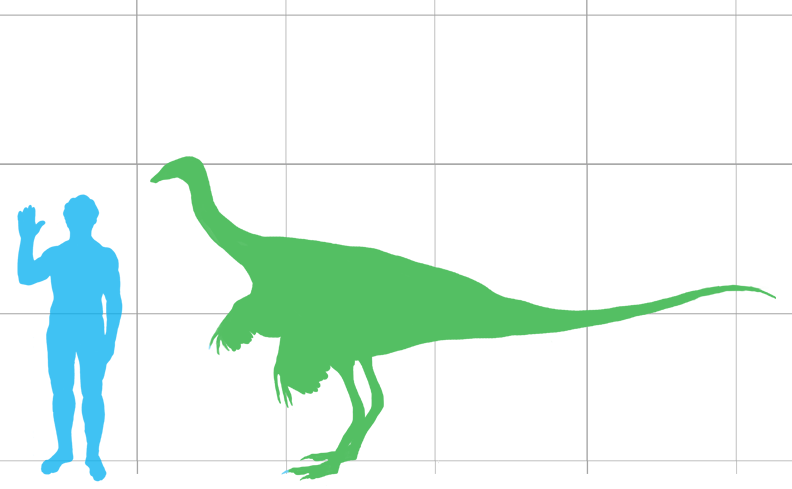
      Size of the largest known

       S. altus

      specimen compared to a human
Remains of Struthiomimus was first discovered in the late 19 th century by Othniel Charles Marsh, but it was incomplete and placed in the Struthiomimus sedens classification. In 1901, Lawrence Lambe found some more incomplete remains and place them in the Struthiomimus sedens genus. In 1914, its classification would be changed when a complete specimen was discovered by Barnum Brown in Alberta, Canada. It wouldn’t be until 1972 that Dale Russell made Struthiomimus its own genus.
Some facts about Struthiomimus that usually catches everyone’s attention is that this dinosaur not only had legs much like an ostriches’ legs but that it could run as fast as a gazelle – or about 40 miles per hour. That would have made it a very fast dinosaur.
If you look at Struthiomimus pictures, then you’ll notice a few things about these creatures – aside from their ostrich-like legs. You’ll discover that they looked very bird-like and looked like they could have been the ancestor to the modern ostrich. What you won’t discover from the pictures, however, is how tall and heavy they were. These dinosaurs were approximately 14 feet long, 4.6 feet tall at the hips and weighed around 330 pounds.
One of the biggest debates surrounding this dinosaur is about its diet. Some paleontologists believe that since it is a member of the therapod group, then it has to be a carnivore. Other paleontologists have speculated that it probably ate buds off of trees and shrubs. Some have even speculated that this dinosaur may have been a filter feeder – using its beak to pick up water and straining the animals out of it to eat.
The real feeding habits of Struthiomimus was probably a combination of plants, animals and insects. It was probably an omnivore and ate whatever was convenient – as many modern birds do today. This means it could have eaten worm-like creatures one day and flower buds the next.
Source: Wikipedia an newdinosaurs
Also read: Giraffatitan
https://paleontology.us/procompsognathus/ Paleontology_US Sun, 03 May 2020 04:29:12 +0000 Dinosaurs http://www.paleontology.us/procompsognathus/ Procompsognathus Procompsognathus /ˌproʊkɒmpˈsɒɡnəθəs/ is an extinct genus of coelophysid theropod dinosaur that lived approximately 210 million years ago during the later part of the Triassic Period, in what is now Germany.  Procompsognathus was a small-sized, lightly built, ground-dwelling, bipedal carnivore, that could grow up to 1 m (3.3 ft) long. Quick Procompsognathus Facts Lived in what is now known as Germany Could run as fast as an ostrich Weighed as much as […]
Procompsognathus /ˌproʊkɒmpˈsɒɡnəθəs/ is an extinct genus of coelophysid theropod dinosaur that lived approximately 210 million years ago during the later part of the Triassic Period, in what is now Germany. Procompsognathus was a small-sized, lightly built, ground-dwelling, bipedal carnivore, that could grow up to 1 m (3.3 ft) long.
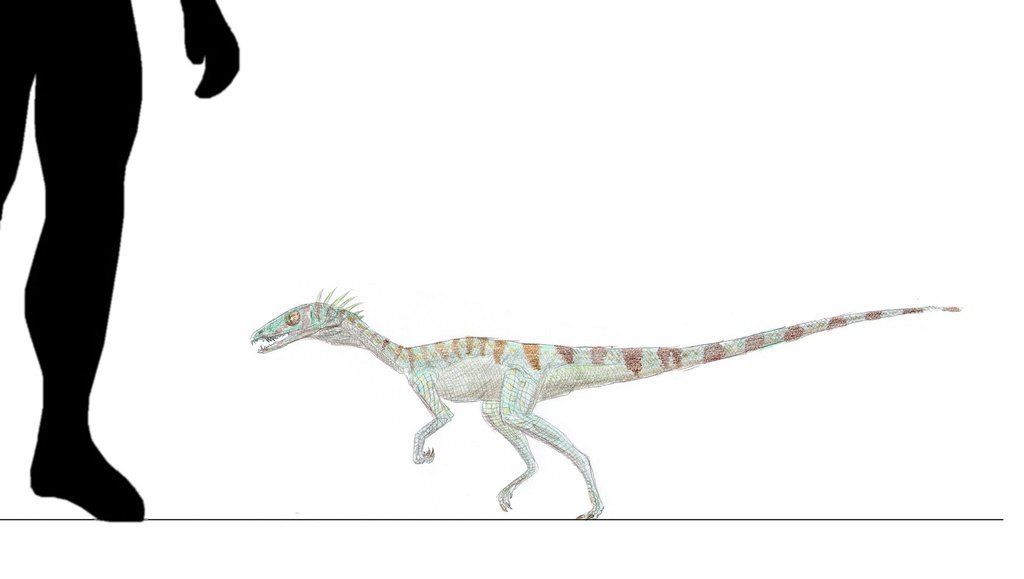
Procompsognathus is a dinosaur that was discovered near Württemberg, Germany in 1909 by Albert Burrer. In 1913, it was named Procompsognathus by Professor Eberhard Fraas – a name which means “before elegant jaw.†It was given this name because its jaws are missing some of the components that would evolve in later dinosaurs.
Some interesting facts about Procompsognathus are that it is not only one of the earliest dinosaurs, living during the Triassic period (about 222 million years ago), but that it is also one of the tiniest dinosaurs to ever live. This dinosaur was only about 10 inches high (at the hips), 3.8 feet long and weighed a mere 2.2 pounds.
This dinosaur belongs to the Order Saurischia – meaning that members of this family were the early ancestors of modern birds. They are also known as “lizard hipped†because they have a hip structure that closely resembles that of a lizard. This includes a pubis bone that points downward and forward.
As you can tell from the Procompsognathus pictures, these dinosaurs very much resembled lizards. And they probably moved very much like a lizard – using quick short bursts to cover ground. This probably made it a pretty efficient hunter for its size.
Its diet probably consisted of small mammals, insects and other reptiles. This means that it diet could have consisted of mammals such as the Tritylodon; insects such as spiders, millipedes and centipedes; and reptiles such as Proganochelys. It might even have been a scavenger – feeding off of the carcasses of animals that have already died. However, scientists believe this is probably unlikely because this dinosaur has a lot of small pointed teeth – which it wouldn’t need if it merely scavenged its meals.
Paleontologists believe that these dinosaurs could run very quickly. While most estimates state that this dinosaur’s top speed was probably around 30 miles per hour, other estimates state that Procompsognathus may have been able to reach a top speed of 43 miles per hour. If that’s true, then that would mean this dinosaur could have run as fast as a modern day ostrich!
Source: Wikipedia an newdinosaurs
Also read: Giraffatitan
https://paleontology.us/camptosaurus/ Paleontology_US Sat, 02 May 2020 04:29:12 +0000 Dinosaurs http://www.paleontology.us/camptosaurus/ Camptosaurus Camptosaurus is a genus of plant-eating, beaked ornithischian dinosaurs of the Late Jurassic period of western North America. The name means ‘flexible lizard’ (Greek καμπτος (kamptos) meaning ‘bent’ and σαυÏος (sauros) meaning ‘lizard’). Quick Camptosaurus Facts Lived in what is now known as Europe and North America As long as 1/2 the length of a semi-trailer Weighed as much as 2 Grizzly Bears […]
Camptosaurus is a genus of plant-eating, beaked ornithischian dinosaurs of the Late Jurassic period of western North America. The name means ‘flexible lizard’ (Greek καμπτος ( kamptos ) meaning ‘bent’ and σαυÏος ( sauros ) meaning ‘lizard’).
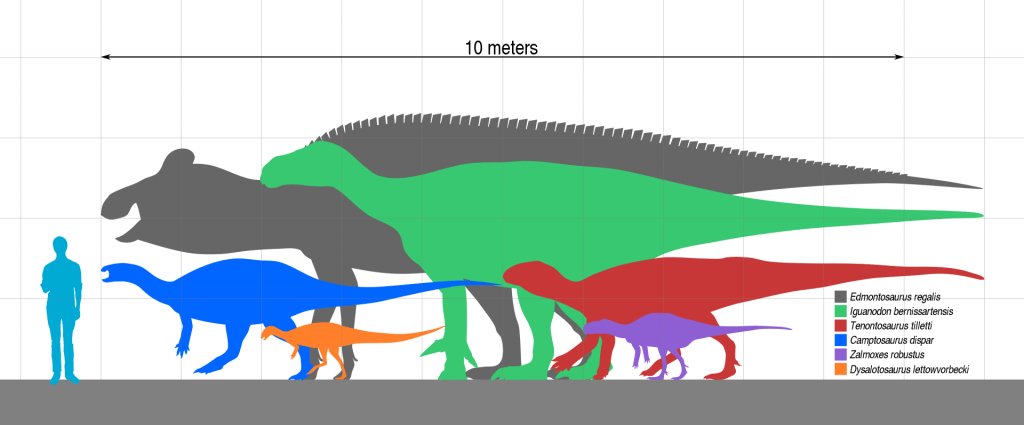
Camptosaurus is a dinosaur that was first discovered on September 4 th , 1879 by William Harlow Reed. It was discovered in Albany County, Wyoming. Around the same time of this discovery, Othniel Charles Marsh discovered another one and named it Camptosaurus – which means “flexible lizard.†It’s believed this dinosaur lived during the late Jurassic period – about 145 to 156 million years ago.
Here are some interesting facts about Camptosaurus: This dinosaur is approximately 23 feet long, 4 feet high and weighed around 2200 pounds. That would mean it weighed as much as 2 full grown Grizzly Bears combined. Judging from all of the Camptosaurus specimens that have been found, it is believed that they primarily lived in North America and Europe.
As you can probably see from the following Camptosaurus pictures, these dinosaurs were heavy built creatures with strong hindquarters and wide feet that allowed it to hold its body upright. These dinosaurs also had big snouts that had a whole lot of teeth and had a horny beak that was probably useful in tearing through tough vegetable matter.
Judging from what they can tell about these dinosaurs, it appears that they were herbivores and only dined on plants. Some of the plants that might have been in their diet include: club mosses, ginkgo, conifer needles, horsetails and ferns.
Like most herbivores, these dinosaurs probably traveled in large herds for protection from predators. While they don’t have a lot of defensive features individually, if they worked together as a group they could have fended off carnivores a lot better. Especially if they were as fast as paleontologists believe them to be.
Many scientists believe that these dinosaurs could run at a top speed of about 15 miles per hour. They believe that because other iguanodonts are also believed to have fast running speeds. If that’s true, then that could have made all the difference in their survival. And if they traveled in herds, then it is quite possible they moved on the ground much in the same way that birds move in the sky.
Source: Wikipedia an newdinosaurs
Also read: Megalosaurus
https://paleontology.us/giraffatitan/ Paleontology_US Sat, 02 May 2020 04:29:11 +0000 Dinosaurs http://www.paleontology.us/giraffatitan/ Giraffatitan Giraffatitan (name meaning “titanic giraffeâ€) is a genus of sauropod dinosaur that lived during the late Jurassic Period (Kimmeridgian–Tithonian stages). It was originally named as an African species of Brachiosaurus  (B. brancai), but this has since been changed. Giraffatitan was for many decades known as the largest dinosaur but recent discoveries of several larger dinosaurs prove otherwise; giant titanosaurians appear to have surpassed Giraffatitan in terms of sheer […]
Giraffatitan (name meaning “titanic giraffeâ€) is a genus of sauropod dinosaur that lived during the late Jurassic Period (Kimmeridgian–Tithonian stages). It was originally named as an African species of Brachiosaurus ( B. brancai ), but this has since been changed. Giraffatitan was for many decades known as the largest dinosaur but recent discoveries of several larger dinosaurs prove otherwise; giant titanosaurians appear to have surpassed Giraffatitan in terms of sheer mass. Also, the sauropod dinosaur Sauroposeidon is estimated to be taller and possibly heavier than Giraffatitan .
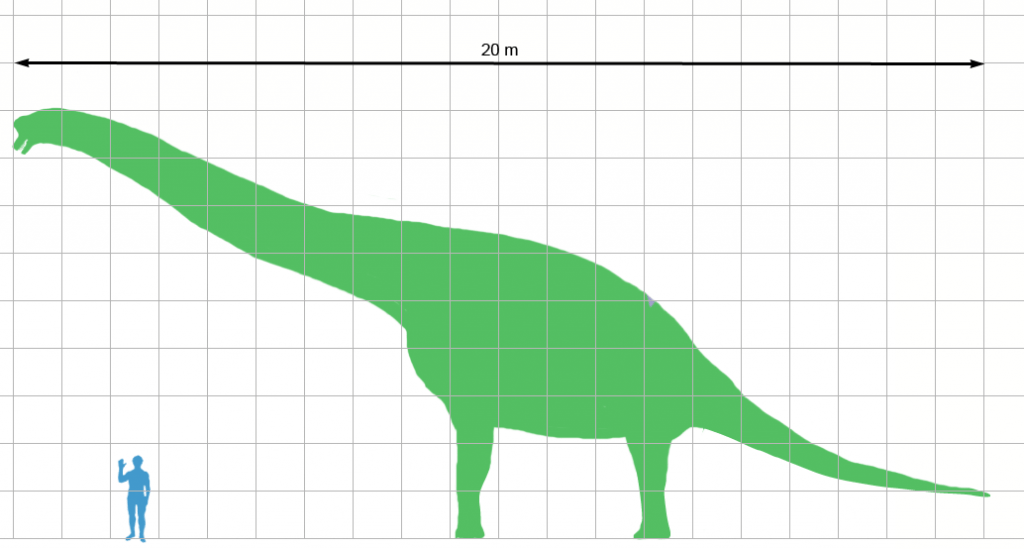
      Size comparison of

       Giraffatitan brancai

      to a human. Each grid segment represents 1 square meter.
About Giraffatitan, dinosaur with the long neck
Giraffatitan is a species of dinosaur that was originally discovered in Tanzania (a part of what was known as German East Africa at the time) between 1909 and 1912 by German paleontologist Werner Janensch. In 1914, he named it a member of the Brachiosaurus brancai family and was given the name Giraffatitan – which means “giant giraffe.†It lived approximately 150 million years ago in parts of Africa during the Late Jurassic Period.
Although about 5 Giraffatitan skeletons have been found, none of them are complete. From these five skeletons, paleontologists have been able to assemble one of the largest mounted dinosaur skeletons in the world. A skeleton which is hanging in the Museum für Naturkunde in Berlin.
Some interesting facts about Giraffatitan include the fact that it was unique enough from the Brachiosaurus brancai family to be placed in its own genus and that this was done in the late 1980s. Its new genus was simply the Giraffatitan genus.
As can be seen from Giraffatitan pictures, these dinosaurs were very much giraffe-like. They had long necks and were about 70 feet long – from head to tail. They weighed approximately 30 short tons and walked on all four legs. In recreations, scientists have colored this dinosaur in shades of yellow – which makes its resemblance to giraffes all that more striking.
These animals were most certainly herbivores and probably browsed the top of trees like giraffes do nowadays. However, they probably not only loved eating ferns and conifers, but also probably enjoyed eating ginkgo, club mosses, horsetails and cycads.
Today, there is some debate over whether Giraffatitan was a warm-blooded animal or a cold-blooded animal. If this dinosaur was warm-blooded, then it would have needed to have consumed a whole lot of food to meet its energy demands. Some paleontologists concluded that it would have needed to eat more than 400 pounds of food a day, if it were warm-blooded. If it were cold blooded, then it would only have required about 200 pounds of food a day. Currently, this debate is unresolved. No one truly knows whether these dinosaurs were warm or cold-blooded.
It is currently unknown whether these dinosaurs traveled in herds or were solitary creatures. Traveling in herds would have been the safe route for these dinosaurs because few predators would want to tangle with a whole herd of these massive creatures. Predators would probably only have preyed on the old, the sick and the young.
Source: Wikipedia an newdinosaurs